

Most of us have at least one mole, skin tag or other small skin lesion. In fact, they’re a completely normal part of our skin and, in most cases, they’re nothing to worry about.
However, there are times when they deserve a closer look.
Perhaps a mole has changed over time. Maybe it’s catching on clothing, becoming irritated when you shave or simply making you feel self-conscious because of where it’s positioned. Whatever your reason for searching for information, it’s natural to want reassurance before deciding what to do next.
Across our Skin Excellence Clinics in Plymouth and Wells, we speak to people every week who aren’t sure whether a mole should be checked, whether it needs removing or whether it’s perfectly normal.
The first thing we always tell them is this:
Not every mole needs to be removed. But every concern deserves to be taken seriously.
Understanding moles and other skin lesions
Although people often use the word “mole” to describe any raised mark on the skin, there are several different types of benign skin lesions.
During your consultation, we may assess conditions such as:
- Moles
- Skin tags (papillomas)
- Seborrhoeic warts
- Viral warts
- Dermatofibromas
Many of these are completely harmless. Some have been present for years, while others develop gradually over time. Although they may look similar, each behaves differently, which is why it’s important not to make assumptions based on photographs or advice found online.
When should you have a mole checked?
One of the most common questions we hear is, “How do I know if I should get this looked at?”
While many moles remain unchanged throughout life, it’s sensible to arrange an assessment if you notice that a mole has:
- Changed in size.
- Changed in shape.
- Changed in colour.
- Started bleeding.
- Become itchy or painful.
- Developed an irregular border.
- Simply doesn’t look or feel the way it used to.
If you’re concerned about a mole for any reason, it should always be checked by a doctor before any removal is considered. This is an important first step to make sure the mole is properly assessed and that cosmetic removal is appropriate.
Sometimes that assessment provides all the reassurance you need. If further investigation is required, your doctor can advise you on the appropriate next steps. Once a mole has been assessed and there are no medical concerns, cosmetic removal can then be considered if it’s something you’d like to explore.
Why do people choose mole removal?
Every patient’s reason is different.
For some, a mole has become uncomfortable because it catches on clothing, jewellery or when shaving.
Others have a raised lesion that becomes irritated repeatedly during everyday life.
For many people, the reason is confidence. A mole on the face, neck or another visible area may have bothered them for years, even though it’s medically harmless.
Whatever brings you to us, we’ll always begin by listening to your concerns before discussing whether treatment is appropriate.
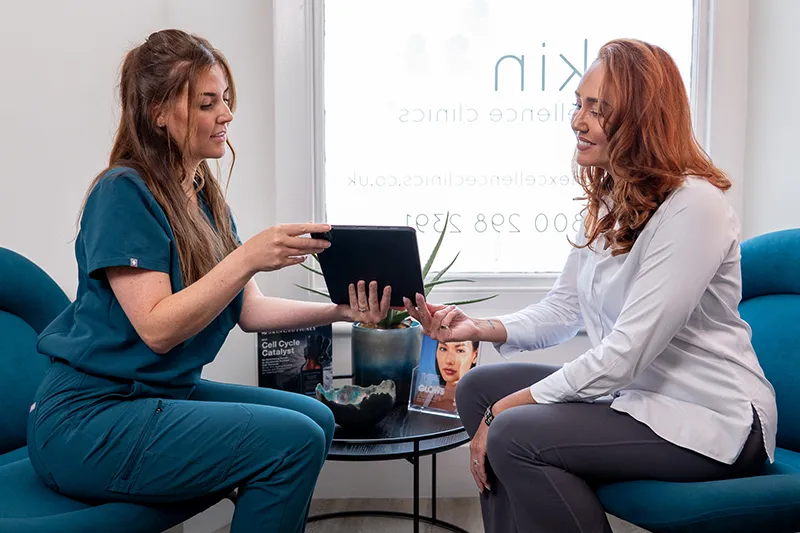
What happens during your consultation?
Once any medical concerns have been ruled out, we can look at whether cosmetic mole removal is right for you.
Your consultation gives us the opportunity to examine the mole or skin lesion, talk about why you’d like it removed and assess the most appropriate way to treat it. We’ll also explain what you can realistically expect from the procedure, including healing, aftercare and the possibility of scarring.
If, at any stage, we’re not satisfied that cosmetic removal is appropriate, we won’t go ahead. We may recommend that you seek further medical assessment before considering treatment.
For suitable benign moles and skin lesions, we’ll then talk you through the removal options available and answer any questions you have before you decide whether you’d like to proceed.
There’s never any pressure to have treatment. The consultation is there to make sure removal is both appropriate for the lesion and the right decision for you.
Does every mole need removing?
No.
One of the things that makes Skin Excellence Clinics different is that we don’t believe treatment is the answer to every concern.
If a lesion appears harmless and isn’t causing you any problems, we may simply advise you to keep an eye on it.
Equally, if removal is likely to improve your comfort or confidence, we’ll explain the options available and help you make an informed decision.
A consultation should never feel like a sales appointment. It should give you the information you need to decide what’s right for you.
How is mole removal performed?
For suitable benign lesions, we often recommend radiosurgery.
Rather than removing tissue using traditional surgical techniques, radiosurgery uses carefully controlled radiofrequency energy to remove the lesion with precision while minimising disruption to the surrounding skin.
This approach supports excellent healing and is particularly well suited to raised lesions, especially those on more visible areas such as the face.
Most moles and other raised benign skin lesions can be treated in a single appointment.
Is the treatment painful?
Before treatment begins, we numb the area using a local anaesthetic.
Most patients tell us the injection is the only part they really notice. Once the area is numb, the procedure itself is usually very comfortable.
Treatment generally takes between 15 and 30 minutes, depending on the number and size of the lesions being removed.
What should you expect afterwards?
Immediately after treatment, you’ll usually notice a small superficial wound where the lesion has been removed.
Over the next day or so, this forms a protective scab while healthy new skin develops underneath. For most people, the scab naturally comes away within seven to ten days.
As the skin continues to heal over the following weeks, the appearance of the area gradually improves. We’ll also provide detailed aftercare advice, including guidance on protecting the healing skin from sun exposure.
Why choose Skin Excellence Clinics?
For more than 15 years, Dr Ian Strawford and the team have successfully removed thousands of unwanted skin lesions using radiosurgery.
Our doctor-led approach means every lesion is carefully assessed before treatment, helping patients feel confident that they’re receiving honest advice as well as expert care.
Whether you visit us in Plymouth or Wells, you’ll receive a personalised consultation, clear explanations and a treatment plan designed around your individual needs rather than a one-size-fits-all approach.
Dr Ian Strawford’s thoughts
What advice would you give someone who is worried about a mole?
If you’re worried about a mole because it has changed colour or size, has recently appeared, become itchy, started bleeding or is causing you any other concern, your first point of call should always be your GP. It’s important to establish that the lesion is benign before considering removal for cosmetic reasons.
Although our medical team has training and expertise in assessing skin lesions, we’re not specialist dermatologists treating skin cancers. If you’re concerned that a mole or skin lesion could be cancerous, we would always advise you to seek medical advice from your GP first.
If you’ve been reassured that the lesion is benign but would still like it removed, this is where we can help. Benign lesions are not generally removed by the NHS for purely cosmetic reasons, so we can assess the lesion and discuss the options available for removing it at Skin Excellence Clinics.
Patient safety will always come first. If you attend the clinic and we identify any features that cause us concern, we won’t proceed with cosmetic removal. We’ll refer you back to your GP so that the lesion can be properly investigated and, where appropriate, treated through the NHS.
Why is careful assessment just as important as the removal itself?
Careful assessment is an essential part of the process because we’re not simply looking at the lesion itself. We also need to consider the patient as a whole.
Factors such as your age, general health, skin integrity and the size and location of the lesion can all influence how well the area is likely to heal. We take these things into account before recommending treatment so that we can make sure removal is appropriate for you and give you realistic expectations about the healing process.
As I’ve mentioned previously, we also need to be satisfied that the lesion is benign before we’re happy to remove it. Our trained medical team will examine the lesion using a dermoscope to look for any unusual features.
If anything gives us cause for concern, we won’t simply go ahead with removal. We’ll advise you to return to your GP for further assessment. For us, careful assessment and safe treatment go hand in hand.
What do patients often tell you after treatment?
The thing I hear most often after treatment is, “I can’t believe how easy that was.”
Many patients are surprised by how straightforward and comfortable the procedure is, and quite often they’ll tell me they wish they’d had it done years ago. They may have spent a long time thinking about having a mole or skin lesion removed, only to discover that the treatment itself was much simpler than they’d imagined.
It’s always lovely to hear, particularly when something that has bothered a patient for years can be dealt with in such a straightforward way.
The Skin Excellence approach
At Skin Excellence Clinics, we believe great care starts with listening.
People often arrive feeling uncertain after reading conflicting information online or worrying about a mole they’ve noticed for months. Our role is to provide clarity, reassurance and honest medical advice, helping you understand your options without pressure.
Whether treatment is recommended or not, we want every patient to leave feeling informed, supported and confident about what happens next.
Frequently Asked Questions
Can all moles be removed?
Many benign moles can be removed safely, although the most suitable treatment depends on the type of lesion and its location. During your consultation, we’ll explain whether removal is appropriate for you.
Will mole removal leave a scar?
Every procedure that affects the skin carries some possibility of scarring. However, radiosurgery is designed to minimise disruption to the surrounding tissue, supporting excellent healing and helping to reduce visible scarring.
How long does healing take?
Most patients experience initial healing within seven to ten days, with the skin continuing to improve over the following weeks.
What if my mole looks suspicious?
If we have any concerns during your assessment, we’ll explain this fully and discuss the most appropriate next steps, which may include referral or speaking with your GP..
Can skin tags and other skin lesions be removed at the same appointment?
In many cases, yes. During your consultation we’ll assess all of the lesions you’d like us to look at and discuss the most appropriate treatment plan.