
Acne treatment in Plymouth and Wells
Acne is more than a skin condition. For many patients, it affects confidence, social life and wellbeing in ways that go well beyond the visible symptoms. At Skin Excellence, we take a comprehensive clinical approach: understanding the type of acne, what’s driving it, and combining treatments to address it from multiple angles.
Dr Strawford’s medical background means patients receive proper clinical assessment alongside aesthetic treatment, including access to prescription options where appropriate.





What is acne?
Acne vulgaris is a chronic inflammatory skin condition affecting the pilosebaceous unit (the hair follicle and its associated oil gland). It’s characterised by a range of lesion types: open and closed comedones (blackheads and whiteheads), inflammatory papules and pustules, and in more severe cases, nodules and cysts.
Acne most commonly affects the face, but can also affect the chest, back and shoulders. It can lead to scarring and post-inflammatory hyperpigmentation, particularly where spots are inflamed or picked.
Acne signs and symptoms
- Blackheads and whiteheads (comedones)
- Inflamed red spots (papules)
- Pus-filled spots (pustules)
- Deep, painful lumps (nodules or cysts)
- Scarring following healing of inflamed spots
- Post-inflammatory redness or dark marks
What causes acne?
Excess sebum production
Overactive sebaceous glands produce more oil than the follicle can clear, contributing to blockage.
Follicle blockage
Excess oil and dead skin cells block the follicle opening, creating a comedone.
Bacterial activity
Cutibacterium acnes (formerly P. acnes) bacteria proliferate in blocked follicles, triggering inflammation.
Hormonal influences
Androgens stimulate sebum production, which is why acne is so prevalent in adolescence and can persist or recur with hormonal fluctuations in adulthood.
Genetics and lifestyle
Family history, diet, stress and certain cosmetic products can all contribute to acne development and severity.
Which acne treatment is right for me?
Choosing between treatments for acne can feel overwhelming. That’s exactly what a consultation is for. We’ll take the time to understand your concerns, assess what’s happening and give you a clear, honest recommendation based on what’s right for your individual situation. There’s never any pressure to proceed.
Every treatment plan starts with a consultation at our Plymouth or Wells clinic.
Your consultation fee is redeemable against your treatment.
Why patients seek treatment
Acne can profoundly affect self-esteem and social confidence. Many patients have tried multiple over-the-counter products without success and are seeking a clinical approach that actually works.
Others have active acne under control but are dealing with the legacy of scarring and pigmentation. Both are treatable, though they require different approaches.
How we treat acne
Resolve active acne
Dermalux Blue LED
Clinically proven to target Cutibacterium acnes bacteria and reduce inflammation.
Chemical peels
Reduce congestion, improve skin cell turnover and reduce the number of comedones and inflammatory lesions.
Medical management
Dr Strawford and his medical team can advise on and prescribe topical and oral prescription treatments where appropriate, as part of a comprehensive approach.
Regenerate skin after acne
Microneedling
For mild to moderate acne scarring: stimulates collagen production to improve scar texture.
Morpheus8 RF microneedling
For more significant scarring: deeper RF microneedling provides greater collagen remodelling.
Polynucleotides
Cellular repair and collagen stimulation to improve scar texture and post-inflammatory pigmentation.
Tixel resurfacing
Tixel is a unique skin resurfacing treatment that uses heat rather than light or energy beams to renew the skin.
Exosomes
Exosomes uses extracellular vesicles to deliver growth factor signals directly into the skin for accelerated repair and renewal.
PRP treatments (skin)
PRP (Platelet Rich Plasma) uses the regenerative power of your own blood to refresh and rebuild your skin from within.
Combination approaches
For active acne, Dermalux LED combined with chemical peels and a medical skincare regime tends to produce the best results. For acne scarring, Morpheus8 combined with exosomes, polynucleotides or PRP gives comprehensive improvement.
What results can you expect?
Active acne can improve significantly within weeks of starting the right treatment regime. Scarring takes longer: most patients see meaningful improvement over 3 to 6 months of treatment.
Dr Strawford will set realistic expectations based on your acne type and severity at your consultation.
Real patient results

More than 10,000 happy Skin Excellence patients
We’re here to make you feel happy, safe and comfortable from your first appointment to your last.
Your consultation

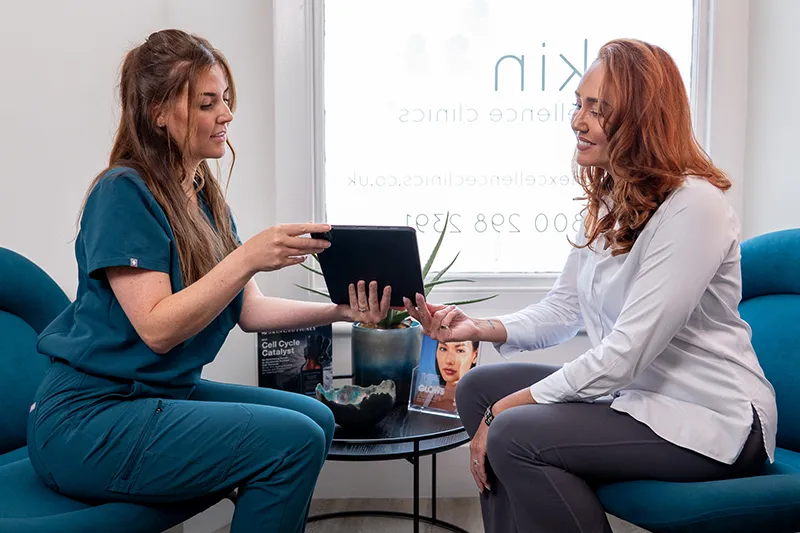
Our journey together starts with an in-depth consultation where we’ll go through every detail: medical, psychological and emotional.
Consultations are private and discreet. Just you and a fully qualified medical professional discussing your hopes and concerns, the treatments available and their limitations. This is your chance to ask questions and our chance to work out the best way forward.
And should you change your mind during your consultation, there’s never any pressure to go ahead.
Acne FAQs
Not always. Many patients do really well with clinic-based treatments and the right skincare. For moderate to severe inflammatory acne, though, prescription treatment can make a big difference. Because Dr Strawford is a doctor, you can be assessed and, if appropriate, access prescription options all in one place.
Yes. Acne scarring responds well to treatments including Morpheus8, microneedling, polynucleotides and chemical peels, though improvement takes time and a course of sessions. How much is achievable depends on the type and depth of the scarring.
Acne comes from a mix of excess oil, blocked pores, bacteria and inflammation, often influenced by hormones. Because several factors are usually at play, a combined approach tends to work best.
Diet can play a part for some people, though it’s rarely the whole story. Acne is driven mostly by oil, blocked pores, bacteria and hormones. A proper assessment looks at the full picture rather than blaming any single cause.

Related conditions
Acne scarring
Hyperpigmentation
Rosacea
Related treatments
Dermalux LED therapy
Chemical peels treatment
Microneedling treatments
Morpheus8 RF microneedling treatment
Polynucleotide skin booster treatment
Here for you
If you would like to discuss any of our treatments, please book a consultation.
We’ll go through every detail together: the treatments available, their limitations, and any concerns you may have. And should you change your mind, there’s never any pressure to go ahead.