
Milia treatment in Plymouth and Wells
Milia are tiny white or yellowish cysts that appear on the surface of the skin, particularly around the eyes and nose. They’re harmless but persistent, and don’t resolve on their own. At Skin Excellence, they can be quickly and effectively treated.





What is milia?
Milia are tiny epidermal cysts filled with keratin (the same protein that makes up the outer layer of skin). They appear as small, firm white or yellowish bumps, typically under 2mm in size.
Primary milia occur spontaneously, particularly around the eyes and on the nose. Secondary milia develop after skin trauma, sun damage or certain skin products that block the skin’s natural exfoliation process.
Milia signs and symptoms
- Tiny white or yellowish firm bumps on the skin
- Typically appearing around the eyes, nose and cheeks
- Persistent bumps that don’t come to a head like a spot
What causes milia?
Blocked skin surface
Keratin becomes trapped beneath the skin surface when the pores are blocked, forming a small cyst.
Sun damage
Chronic sun damage thickens the skin surface, making it harder for keratin to shed normally.
Skincare products
Heavy, occlusive skincare products can contribute to milia formation.
Skin trauma
Secondary milia can develop in areas of skin that have been burned, blistered or otherwise traumatised.
Which milia treatment is right for me?
Choosing between treatments for milia can feel overwhelming. That’s exactly what a consultation is for. We’ll take the time to understand your concerns, assess what’s happening and give you a clear, honest recommendation based on what’s right for your individual situation. There’s never any pressure to proceed.
Every treatment plan starts with a consultation at our Plymouth or Wells clinic.
Your consultation fee is redeemable against your treatment.
Why patients seek treatment
Patients seek treatment because milia are persistent and don’t resolve without extraction. They’re particularly noticeable around the eyes and affect the appearance of the skin.
How we treat milia
Manual extraction
Lead by our qualified nurses, milia is removed by making a tiny incision using a needle in the skin surface and expressing the contents. Quick, effective and leaves no significant mark.
Combination approaches
Addressing underlying skincare habits that contribute to milia formation is important alongside treatment to prevent recurrence. Appropriate exfoliation and non-comedogenic skincare are recommended.
What results can you expect?
Milia is resolved at the time of extraction. With appropriate skincare and SPF, recurrence can be minimised.
More than 10,000 happy Skin Excellence patients
We’re here to make you feel happy, safe and comfortable from your first appointment to your last.
Your consultation

Our journey together starts with an in-depth consultation where we’ll go through every detail: medical, psychological and emotional.
Consultations are private and discreet. Just you and a fully qualified medical professional discussing your hopes and concerns, the treatments available and their limitations. This is your chance to ask questions and our chance to work out the best way forward.
And should you change your mind during your consultation, there’s never any pressure to go ahead.
Milia FAQs
Milia are the tiny, firm white bumps that often appear around the eyes and on the cheeks. They’re small pockets of keratin trapped just under the skin. Harmless, but many people would rather they weren’t there.
Yes. Milia are straightforward to remove with a simple clinic procedure, and most can be dealt with in a single visit. It’s best done professionally rather than picked at home, to avoid marking the skin.
Removed milia don’t typically return in the same spot, but some people are prone to forming new ones. Good skincare can help reduce how often they appear.
Milia form when keratin, a natural skin protein, gets trapped just beneath the surface. They’re very common, can appear at any age, and are often linked to heavy skincare products or sun damage, though many people simply get them.

Related conditions
Acne
Sun damage
Large pores
Related treatments
Chemical peels treatment
Microneedling treatments
Skin lumps and bumps treatment
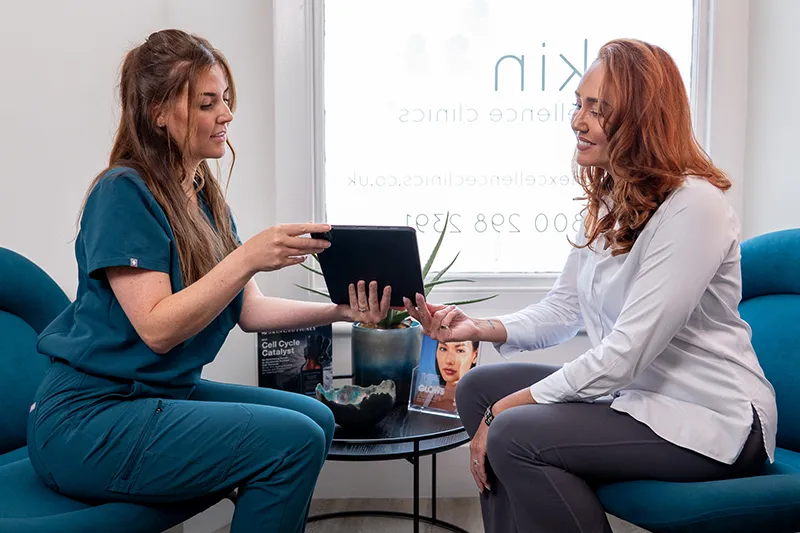
Here for you
If you would like to discuss any of our treatments, please book a consultation.
We’ll go through every detail together: the treatments available, their limitations, and any concerns you may have. And should you change your mind, there’s never any pressure to go ahead.